
Quadrilaterals are shapes with four straight lines. But depending on how those straight lines intersect one another, gives rise to special situations and special quadrilaterals. For example, a square is a quadrilateral with sides all the same length and any two sides intersect at right angles. As a result, opposite sides of a quadrilateral are parallel. Learn more about the different types of quadrilaterals their properties and practice identifying them
You may also like
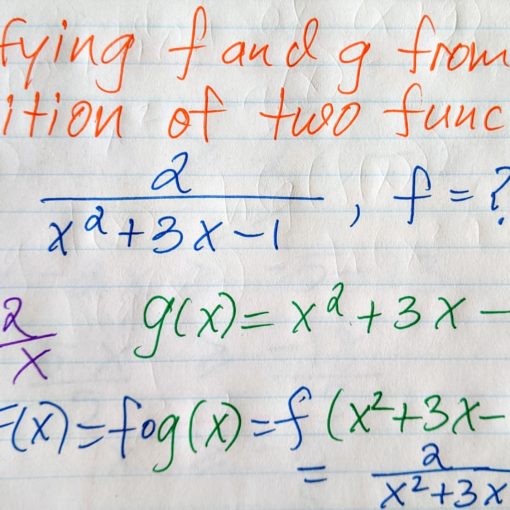
Practice identifying the functions from a composition of functions with Raise my marks math tutoring and exercise worksheets.

We’re always considering distance when travel. We are looking for the shortest distance but we are restricted by roads or whatever form of transportation we choose to use. The shortest distance between any two point is, however, a straight line. Given two points we look at the formula for finding the shortest distance between two point, or the distance formula.
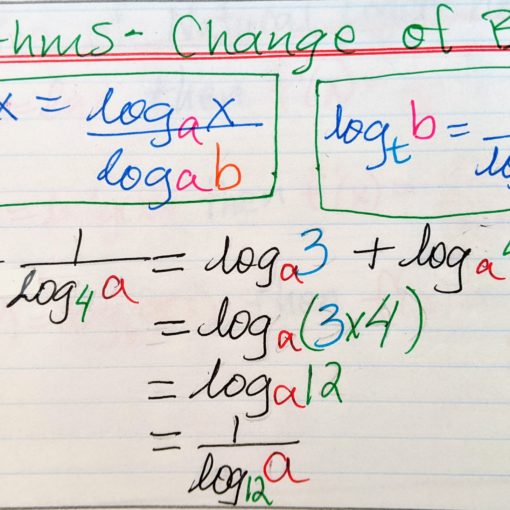
Practice changing the base of the logarithm function with Raise My Marks math tutoring and exercises, Ottawa, Toronto, Canada: provincial curriculum, IB math, AP calculus, university math and more.
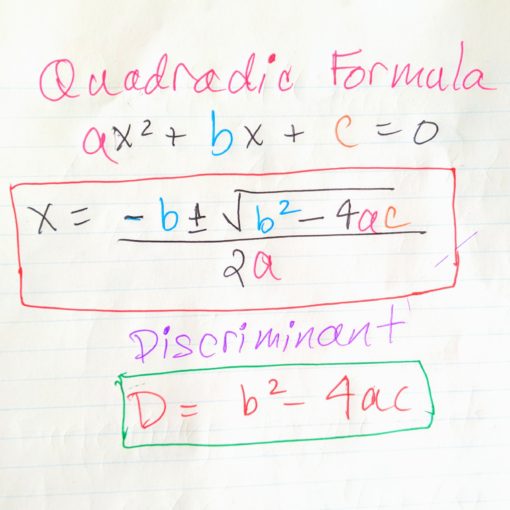
When we are faced with a quadratic that is not “nice” to factor we need to find a way to factor it. This is where the quadratic formula comes in. The discriminant is a value that can be calculated for each quadratic equation. Depending on the value of the discriminant, we can determine if the quadratic equation has a solution, or has factors, or not.